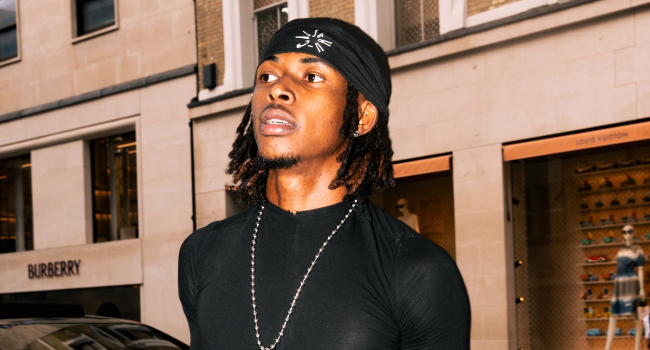
South African hip-hop has a new full-length release to explore as Congolese-born, Cape Town-raised rapper BabyDaiz officially introduces his debut album, KINDOKI (KDK).
Released on Friday, November 27, 2026, the 15-track project marks an important milestone for the rising artist. It brings together influences from his Congolese heritage and his upbringing in South Africa, drawing on local street sounds, trap and Afrobeats to shape its musical direction.
For BabyDaiz, the album represents more than simply reaching the debut-album stage. It offers listeners a closer look at the cultural experiences and musical influences that have helped shape his identity.
From Kinshasa to Cape Town
Born David Manda Nzapa in Kinshasa, Democratic Republic of Congo, in 2001, BabyDaiz moved to Cape Town when he was nine years old.
Growing up between two different cultural environments has played an important role in his artistic development. His background connects him to Congolese musical and cultural traditions while his experiences in Cape Town have exposed him to the sounds and realities of South African street culture.
That combination is central to the identity of KINDOKI (KDK).
Rather than limiting himself to one musical direction, BabyDaiz draws from different influences, including trap and Afrobeats. The result is a project that reflects the experiences of an artist whose story connects two African countries.
The rapper also acknowledged the importance of those connections when discussing the album, expressing gratitude to supporters in both Congo and South Africa.
“All my people in Congo & South Africa, I am me because of you,” he shared.
The message captures the personal connection behind the project and the communities that have supported his journey.
A 15-Track Introduction
KINDOKI (KDK) arrives with 15 tracks, giving BabyDaiz room to introduce different sides of his sound and bring several collaborators into the project.
The album includes appearances from artists such as Tiakola, Didi B, Ayo Maff, LeoStayTrill, Famous Pluto, Priddy Prince, JakSparo, Rafa Pabön, Ruger, MfanaTouchLine, KindlyNxsh and Brotherkupa.
The collaborations give the release a wider African and international dimension, bringing together performers from different musical backgrounds.
One of the notable connections is Tiakola, the French-Congolese artist who previously worked with BabyDaiz on “El Classico”. That collaboration helped highlight a shared cultural connection between the two artists.
BabyDaiz also brings familiar names from his previous releases into the album. “Phumela”, featuring KindlyNxsh and Brotherkupa, and “Allonsy”, featuring Kvng Vinci, are among the records included in the tracklist.
The project was released through his NF&H imprint and is now available on digital streaming platforms.
Building Beyond His Previous Releases
Before arriving at his debut album, BabyDaiz had already been developing his catalogue through a series of releases.
His earlier work includes NFH: The Mixtape, released in 2024, alongside songs such as “Allonsy”, “Phumela” and “Coupé”.
These releases helped establish the musical direction that listeners can now explore across KINDOKI (KDK).
The debut album gives those influences a larger platform, with a collection that connects his earlier work to a broader artistic statement.
His collaboration with Tiakola on “El Classico” also reflects his growing connections beyond South Africa, while the album’s wider list of guest appearances creates further opportunities to introduce his music to new audiences.
A New Chapter for the Cape Town-Raised Rapper
Cape Town has a diverse hip-hop landscape, with artists continuing to draw from different languages, backgrounds and musical traditions. BabyDaiz brings another perspective to that environment through a story that begins in Kinshasa and continues in the Mother City.
With KINDOKI (KDK), he places that journey at the centre of his debut album.
The release also gives listeners an opportunity to discover an artist whose musical identity is shaped by more than one cultural environment. His Congolese heritage and South African upbringing are not separate parts of the story; they come together in the sound and presentation of the project.
Now that the album is officially out, the next step will be seeing how audiences respond to this introduction and where BabyDaiz takes his sound from here.
For now, KINDOKI (KDK) stands as a significant release in his career and another addition to the growing catalogue of Cape Town-connected hip-hop.
Stream BabyDaiz’s KINDOKI (KDK) on digital streaming platforms.
About the Author